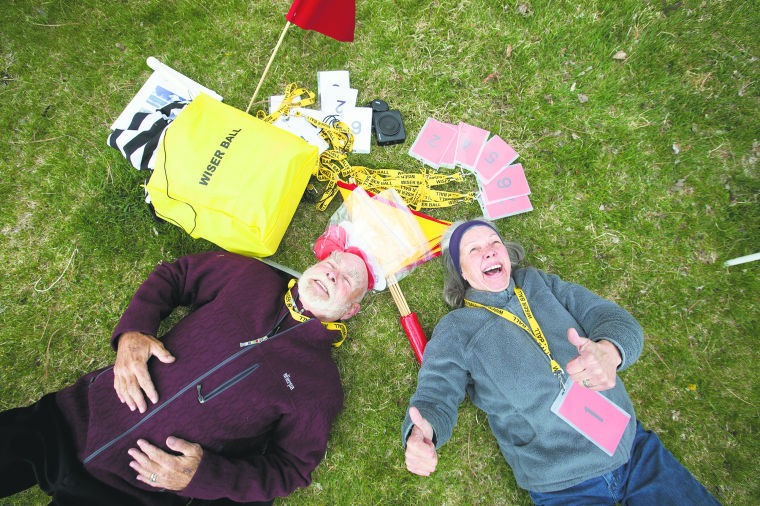
Mike and Deborah Jones are on a mission of fun — to make Taos healthier and smarter with Wiser Ball.
Wiser Ball was so-named, the Joneses say, because it makes you smarter as it exercises the body and spirit.
Originally played thousands of years ago in ancient China, the game started with the “common” people and was later picked up by royalty, scholars and administrators, according to a video of the first international Wiser Ball tournament, Nov. 13, 2013 in Hangzhu, China.
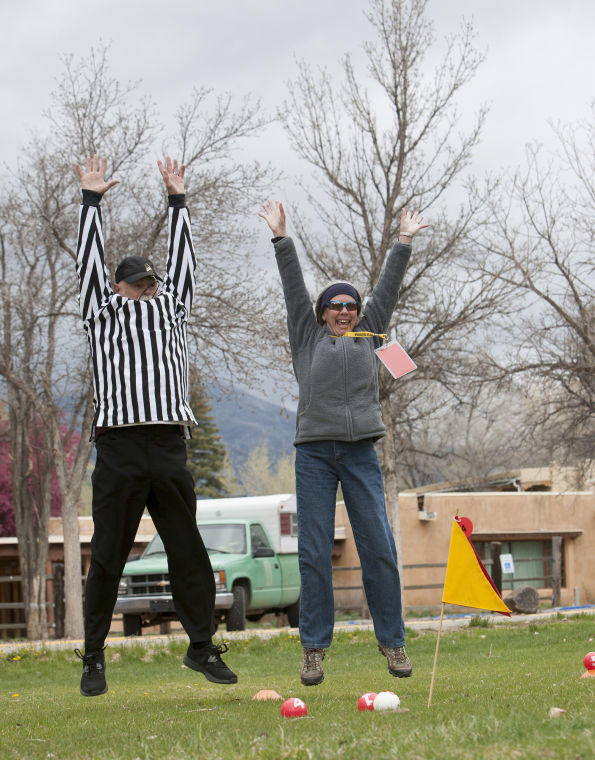
The Chinese official in the video is quoted saying how fitting it is that the game is now being “fed back to the people,” from whence it came, with the emphasis always being “Happiness first, competition second.”
“It’s interesting, (Wiser Ball) has subtleties and nuances that aren’t apparent at first,” Mike Jones said, describing the couple’s first encounter with the game two years ago when he and Deb were visiting friends in Southern California.
“It’s such a simple game, I was intrigued by how much fun they were having. The enthusiasm is just amazing and it ranges across generations,” Mike said.
Judging by a few of the Youtube videos online, the game seems strangely infectious, in fact, it’s the penultimate “social” game, Deb says, in that you bond tightly with your teammates through the joy of participation.
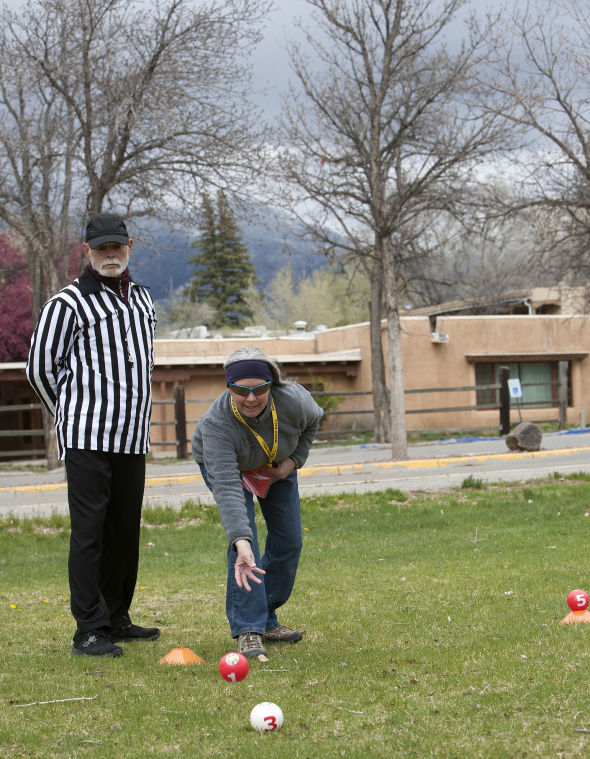
“Besides being fun, it’s very adaptable,” Deb adds. “As long as people can hold a ball and roll it, they can play it. It can be geared for more ease or more complexity.”
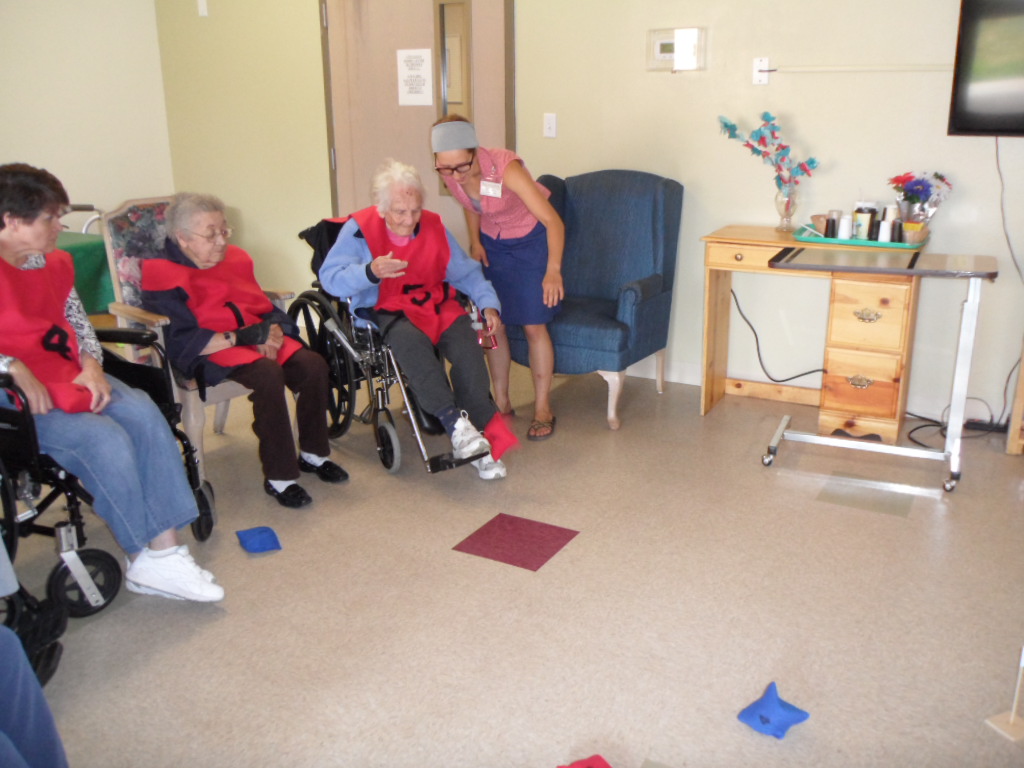
In her career as an occupational therapist/hand specialist (from which she just retired in February), Deb Jones also worked at Taos Living Center, and introduced Wiser Ball using numbered bean bags she made instead of numbered balls. It is now played twice a week by residents, whether standing or from their wheelchairs.
Granted, Deb says the residents’ level of play is quite moderate, but because the game is engaging, it offers much-needed mental and physical stimulation – something nearly all humans crave.
Plus there’s the camaraderie that solo sports don’t offer, unless you hike and bike in groups of two or more (which can be treacherous given the narrow trails and unfriendly bike culture in Taos).
Having the goal of strategic elimination, plus the joyful skill of hitting your mark (an opposing team’s ball) creates a collective thrill through the group dynamic that’s a bit uncanny, judging by the happy faces and bright eyes of the Joneses and various teams seen online.
Since being revived, in two short years there are now 400 official Wiser Ball teams in 30 countries worldwide, with more teams being added almost daily.
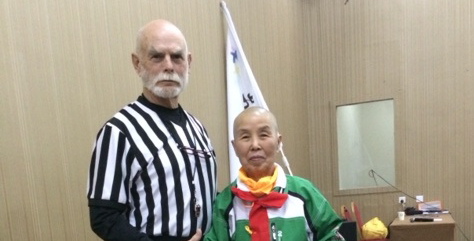
Mike Jones, retired from law enforcement, is a World Wide Sport Committee Referee Trainer who went to China this winter with a fellow referee trainer where he said in three days they certified just under a 1,000 referees for Wiser Ball. Two of the referee candidates were Canadian women who presumably are filling a need for Canadian tournaments.
“The people I saw play in China were in below-freezing weather,” Mike says. “They were young kids and people older than me … You can have all seven balls out there and here comes an 81-year-old who can eliminate them all!”
Deb says their joint hope, of course, is to get league tournaments going between schools, businesses, nonprofits and the like in Taos.
“Wiser Ball really promotes fun and teamwork,” she said, emphasizing that the first goal of the game is: Have fun!
Deb and Mike Jones will be offering free Wiser Ball clinics (information and demo sessions) on Sundays, starting June 8, at 1 p.m. at Kit Carson Park, on the first field at the park’s entrance, barring any festivals or major holidays (like July 4th weekend etc.).
Who knows, maybe in two more years Taos will host the next international Wiser Ball tournament in the U.S.
We’ve got the talent and Eco Sports Park, all we need now is the opportunity.